Southern All Star Series Race Director Ray Cook explained what happened with the late race caution that sent Ross Bailes to the pit area during the Blue Gray 100 at Cherokee Speedway on Sunday evening.
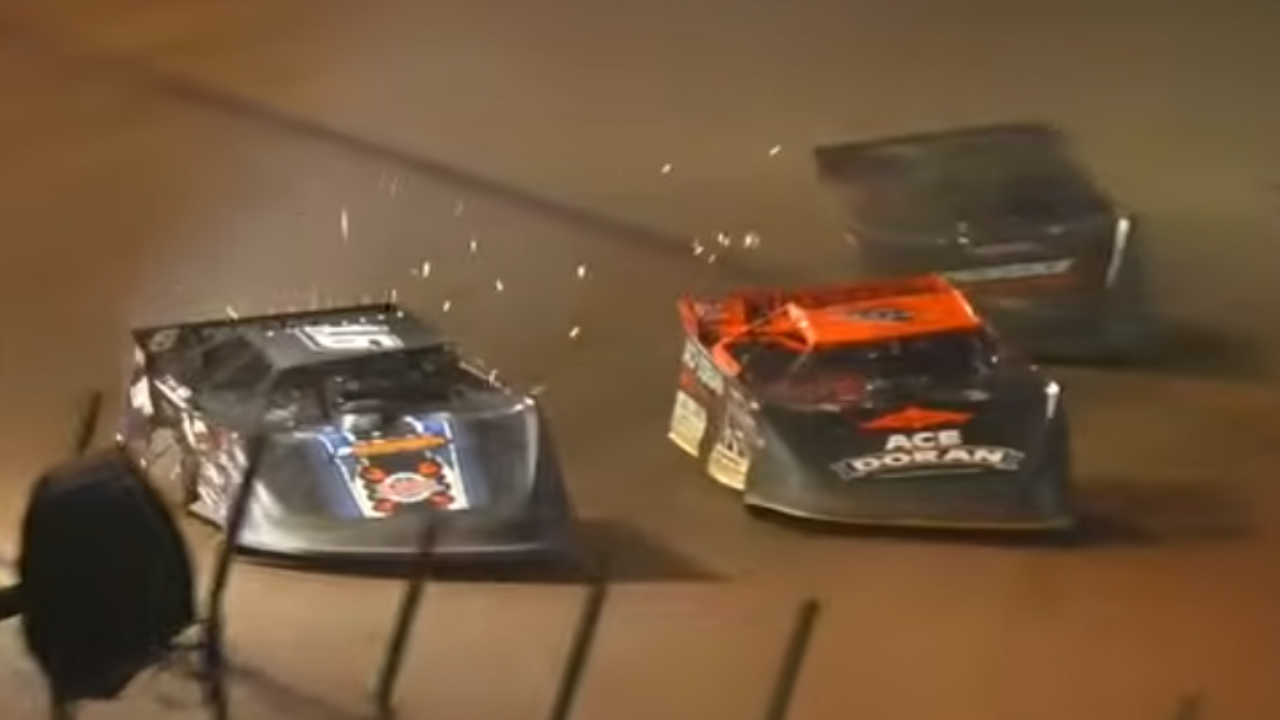
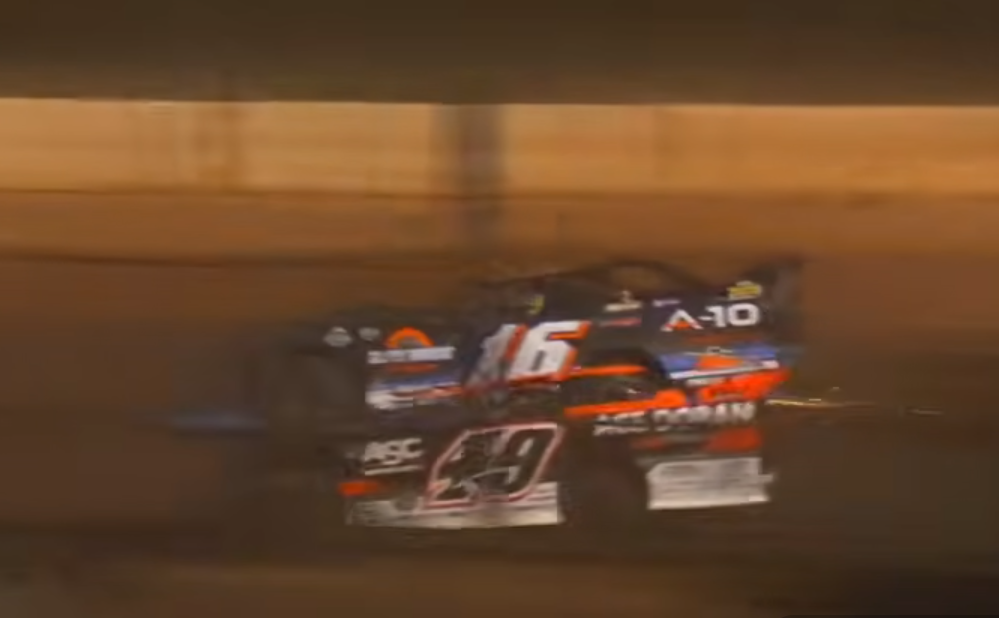
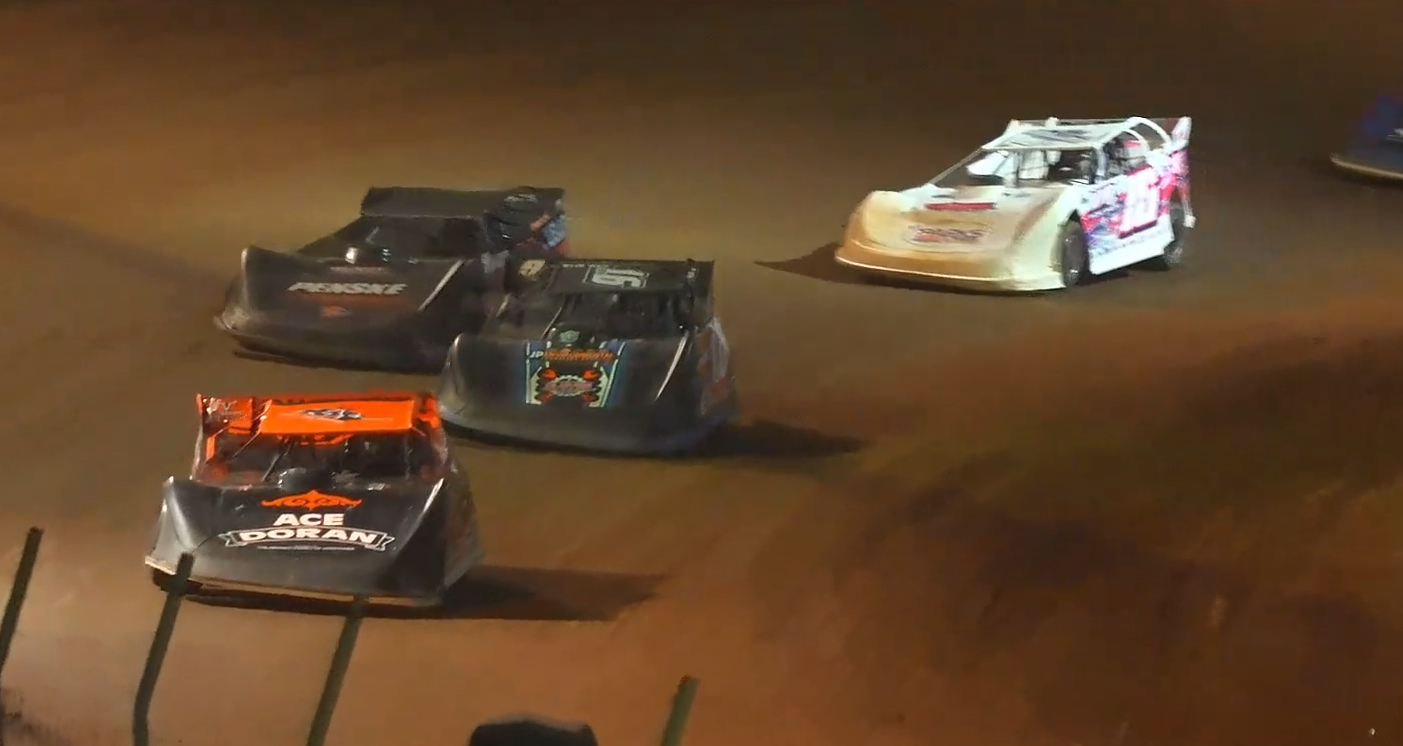
On a restart with 7 laps to go, race leader Ross Bailes began sparking and smoking coming out of turn 4 and all the way down the front stretch, through turns 1 and 2 and onto the back stretch. As they got to the back stretch, second running Jonathan Davenport got a run and got underneath Bailes, who appeared to slow. The caution was thrown and the race stayed under caution for a significant period of time. At one point during the caution period, series officials inspected the rear of Bailes’ car to determine what the cause of the sparks and smoke were, but were unable to pinpoint the problem.
Bailes would later accelerate from the middle of turns 1 and 2 down the back stretch and the problem would persist with sparks and smoke coming out of the rear of the car. In order to diagnose the problem, Bailes went to the infield pit area giving up his position on the track.
It was eventually reported on the FloRacing and Hunt the Front TV broadcast that Bailes had a spring steel rubbing against his wheel that was causing the sparks and smoke. Bailes would return to the race and salvage a 13th place finish.
Cook spoke with StockCarReport.com to explain the initial caution, why they ran so many laps under caution, and what his thought process was to determine a ruling.
“The caution was thrown prematurely by the flagman, who works for Gaffney, Cherokee Speedway. I don’t know the gentleman. I’m not mad at him or nothing. The best case scenario would have let that play out down the back straightaway and see what happened, which was what I was trying to do.”
“But the flagman was probably wondering why I hadn’t thrown the caution,” he continued. “So he took it upon himself to throw it because of all the sparks and smoke. And it did look like Ross was blowing something up. So I understand why he threw the caution because that was an extremely large amount of sparks and smoke.”
“Obviously, on a restart you got the whole field coming at you and he’s in front so it was just a bad circumstance. If we could have let it play out before caution then it would have been easier decisions. But since he took it upon hisself to throw the caution before we called it then that’s what put us in that situation.”
After explaining that the caution was inadvertently thrown, Cook shared, “We’re all sick to our stomach, because of what ifs, you know? It’s just a position no Race Director wants to be put in. And certainly, from Ross’ standpoint, he just wanted to see it play out and that’s what I was going to let it do. I was going to let it play out ’cause I’ve learned in the past this is the best way to handle that. But anyway we didn’t get that opportunity. It forced us to make a decision.”
“I sat there and weighed it back-and-forth for a long time. Longer than normal,” he elaborated. “I let them run around there four or five laps. It seemed like 30 minutes to me. I’m sure it did the drivers, but it’s just trying to make the right decisions.”
“I was almost at the point, trying to figure out a way to blend him in, or—. Because Jonathan passed him, but I didn’t know the caution had actually came out. I went back, watched the video, and Jonathan passed him. But I think Ross lifted because he seen the yellow coming off of 2 before Jonathan did. But Jonathan had a run on him anyhow. We just didn’t get to see it play out. It’s like watching a good movie and the power went off before you finished it. We didn’t get to watch it play out. It put me in a bad spot, but it’s racing. That’s what we signed up for. I don’t regret my call. It would’ve been a lot easier if it had got to play out.”
“I thought about leaving him up there and trying to blend him,” Cook reiterated. “And then when Ross seen what we were fixing to do, he gassed up to pull back around, I guess to talk to us. And when he gassed it up that second time, it was still shooting sparks out the back like it did before. So I said, ‘Ross, this ain’t going to fix itself. You just gotta pull in.’ It’s a bad deal. He may have finished. He may not have. We’ll never know that.”
Cook then shared why he instructed Bailes to head to the infield hot pit to fix the issue pointing to various instances this year including the wreck with Dalton Cook and Dale McDowell during their heat race at Eldora , Hudson O’Neal’s flat tire at Fairbury, and Dan Ebert breaking during the North South 100 at Florence Speedway.
“It’s sad, but I look at the instances we’ve had this year with restarts when people got stuff wrong on their cars and it just hasn’t ended well for the rest of the field,” Cook said. “Even at Florence this year, when Dan Ebert broke in front of the field it wadded up everybody right behind him. You’re standing there on the trailer thinking about all these things and trying to make a decision in a matter of minutes. The last thing I want to do is be the reason why Ross didn’t win this race. But at the end of the day I’m not the reason. It’s whoever put the body bracing on or whatever reason that it broke. I’ve never ever in my life seen body bracing cause that many sparks and smoke. It was putting out sparks that normally would be a quick change or a rear end breaking.”
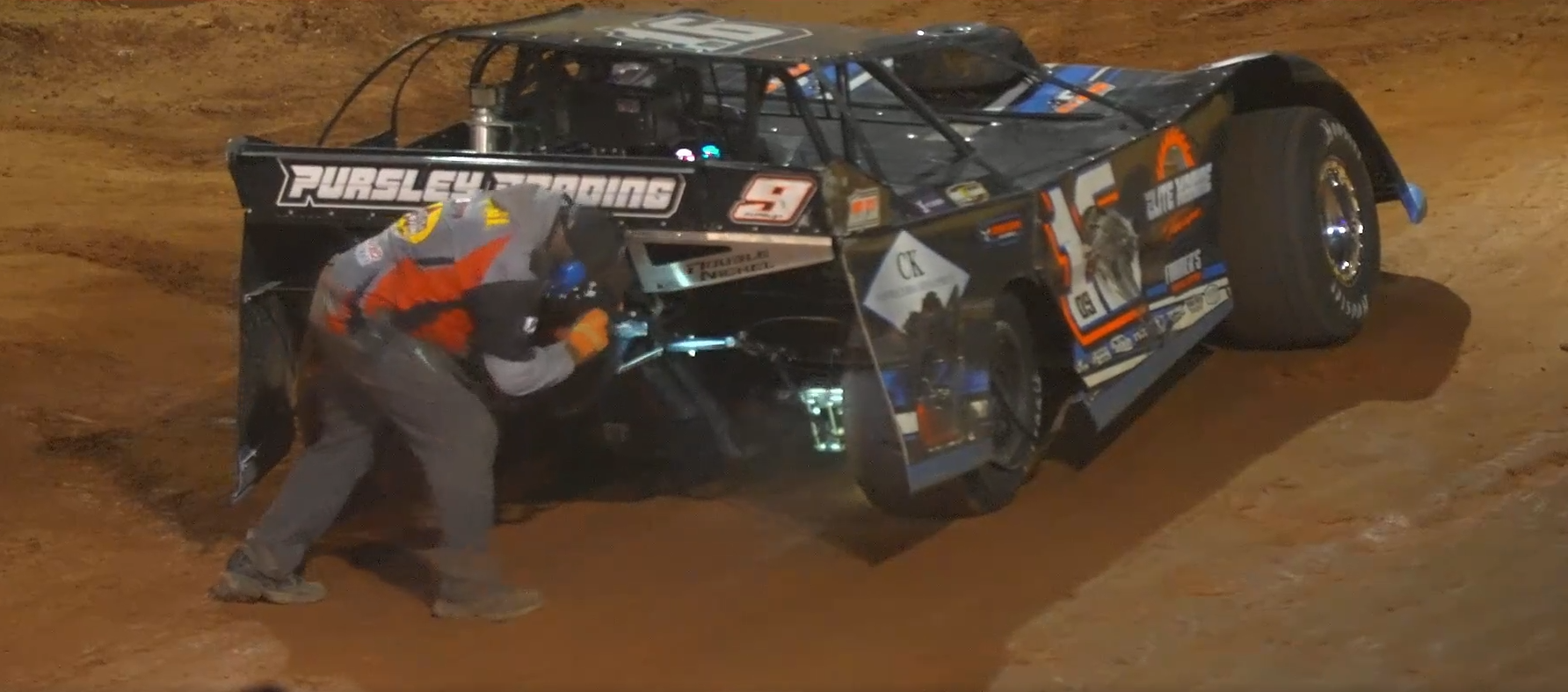
In regards to the official who missed the bracing while inspecting the car in turn 1, Cook relayed, “He was looking where I told him to look. I told him, ‘Look under the back of that car and see if the rear end or anything’s on.’ We had no idea there was a body brace anywhere. Like I said, I’ve never seen body bracing throw that many sparks and cause that much smoke. But there’s a first time for everything. But the official was looking where I asked him to look at. I didn’t tell him to go all the way around the car. I said, ‘Look under the car at the rear end. See if you see something.’ And that’s where he was looking. So he’d done what I’d asked him to do.”
“if it had been able to play out, we wouldn’t be having this conversation, but it wasn’t,” he continued. “It’s easy right now to sit back and say it was a body brace, obviously. But at the time, nobody had a clue it was a body brace that was involved. In other words, I didn’t, the officials didn’t, nobody in the tower said anything, Ross didn’t know, Ross’ crew didn’t know. Nobody knew it was a body brace ’til after the race was over. Now, there’s some people in the stands may have seen it or whatever, but I don’t communication with them.”
“And we had plenty of time for somebody to tell, ‘There’s a body brace,’ because it wasn’t like I made a split second decision. I really took longer than I normally do. I really tried to evaluate and weigh out every scenario. I just didn’t see a scenario where it was good for us to go back green at a place as big as Gaffney and then wide open and take the chance on wadding up the whole field down the back straightaway. We’ve seen it happen three times this year already between—. And the deal at Florence wasn’t nothing on a calling, it was just a parts failure. That’s a prime example of what happens when a part failure occurs.
“You got everybody coming at you,” Cook said. “There’s no spacing in between the cars on a restart. Everybody’s bumper-to-bumper. It just would not have been good if that would have happened. It’s a bad deal. I been on both sides of it.”
Jonathan Davenport, who started fourth, led the final seven laps and won his second career Blue Gray 100. Chris Madden finished second and Ben Watkins finished third.
NEXT: What Drivers Said After The Blue Gray 100 At Cherokee Speedway With The Southern All Stars
0 Comments